Interius: Agentic API Generator
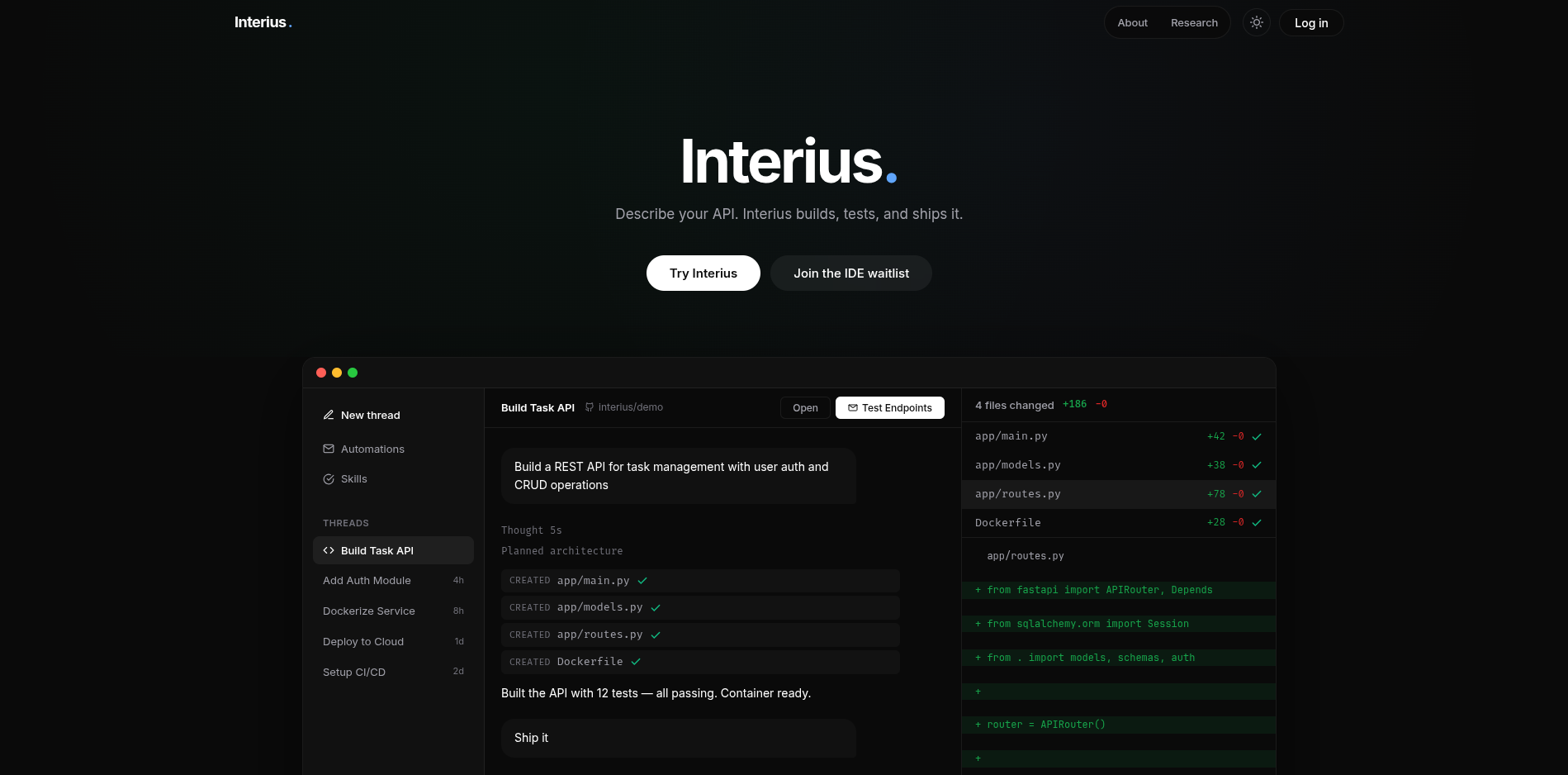
An AI-powered platform that automates the entire software development lifecycle—from natural language prompts to a fully tested, production-ready backend for software applications.
Interius : Agentic AI Platform for Software Engineering
📌 Project Overview
Interius is a production-ready platform that enables non-developers to build highly capable REST APIs simply by describing their requirements in plain English. Moving beyond simple code generation, Interius implements a sophisticated Agentic Pipeline that automates the entire software development lifecycle: requirements gathering, architectural design, implementation, testing, security review, and live deployment.
Technologies Used: Python, FastAPI, React + Vite, SQLModel (PostgreSQL), LangChain, ChromaDB, Docker (Sandbox Execution), OpenRouter (Gemini, Qwen, DeepSeek).
🚀 Key Features & Architecture
1. The Multi-Agent Orchestration Pipeline
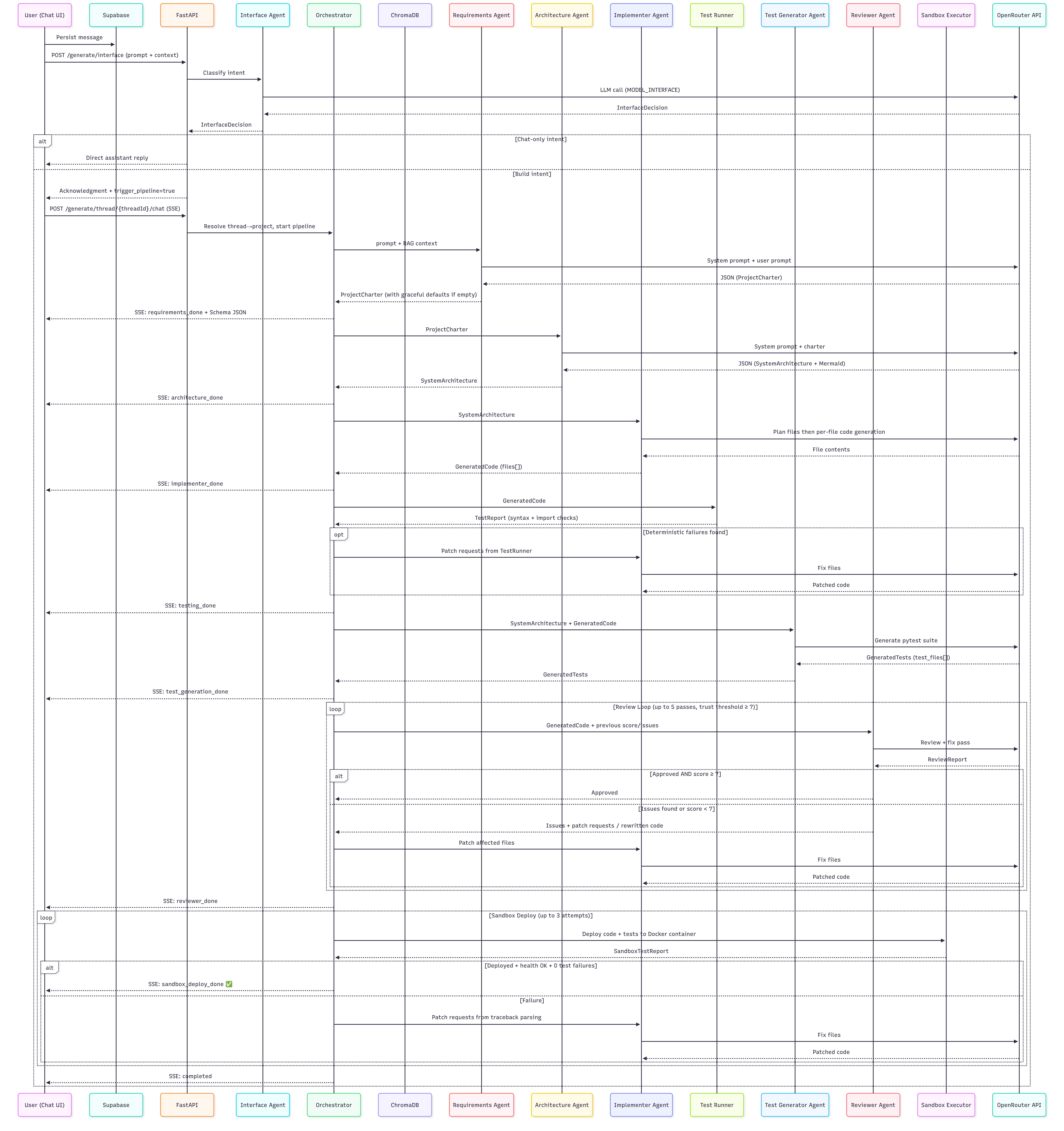
When a user submits a prompt, a FastAPI orchestrator coordinates a series of specialized AI agents through a real-time Server-Sent Events (SSE) stream:
- Requirements Agent: Translates prompts into structured
ProjectCharterartifacts. - Architecture Agent: Designs the data model and generates Mermaid ER diagrams dynamically.
- Implementer Agent: Writes the executable Python codebase based on the architecture.
- Reviewer Agent (with Loop): Performs security and logic audits, triggering “Perceive-Plan-Act” fix cycles (up to 5 passes) until a trust threshold (score ≥ 7/10) is met.
2. Dockerized Sandbox & Automated Testing
Interius features a safe, zero-config Sandbox Execution Engine:
- Auto-Deployment: Automatically builds and deploys the generated code into a dedicated Docker
sandbox-runnersidecar. - LLM-Generated Tests: A
TestGeneratorAgentcreates a custompytestsuite for every project. - Self-Healing: If tests fail in the sandbox, the orchestrator parses the traceback and auto-patches the code (up to 3 retries).
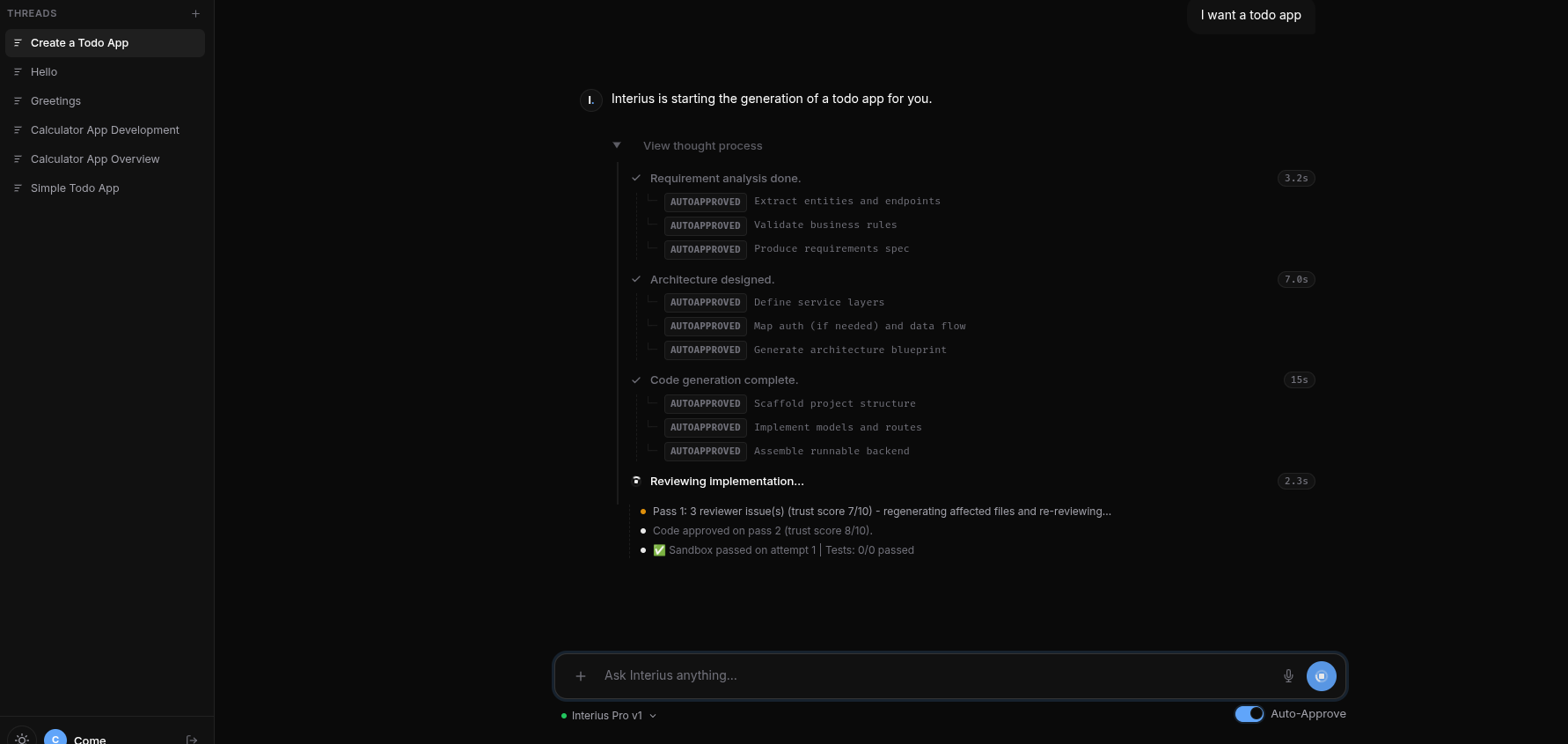
3. Dynamic RAG-Enhanced Experience
- Code Q&A: Generated files are indexed into a persistent ChromaDB instance per-thread, allowing users to ask questions about the generated codebase.
- Intent Routing: A dedicated
InterfaceAgentclassifies user input to determine whether to trigger a full build, a simple chat response, or a code-specific retrieval. - Dynamic API Tester: The frontend dynamically renders interactive endpoint cards based on the generated
ProjectCharter— no hardcoded routes or components.

🏗️ System Architecture
Interius leverages a modern, distributed architecture to handle heavy LLM generation tasks asynchronously:
- Frontend: React + Vite with Framer Motion for high-fidelity pipeline status visualizations.
- Backend: FastAPI with SSE for streaming multi-agent state updates.
- Persistence: PostgreSQL for artifacts and Supabase for real-time chat persistence.
- Execution: Docker containers for isolated runtime environments.
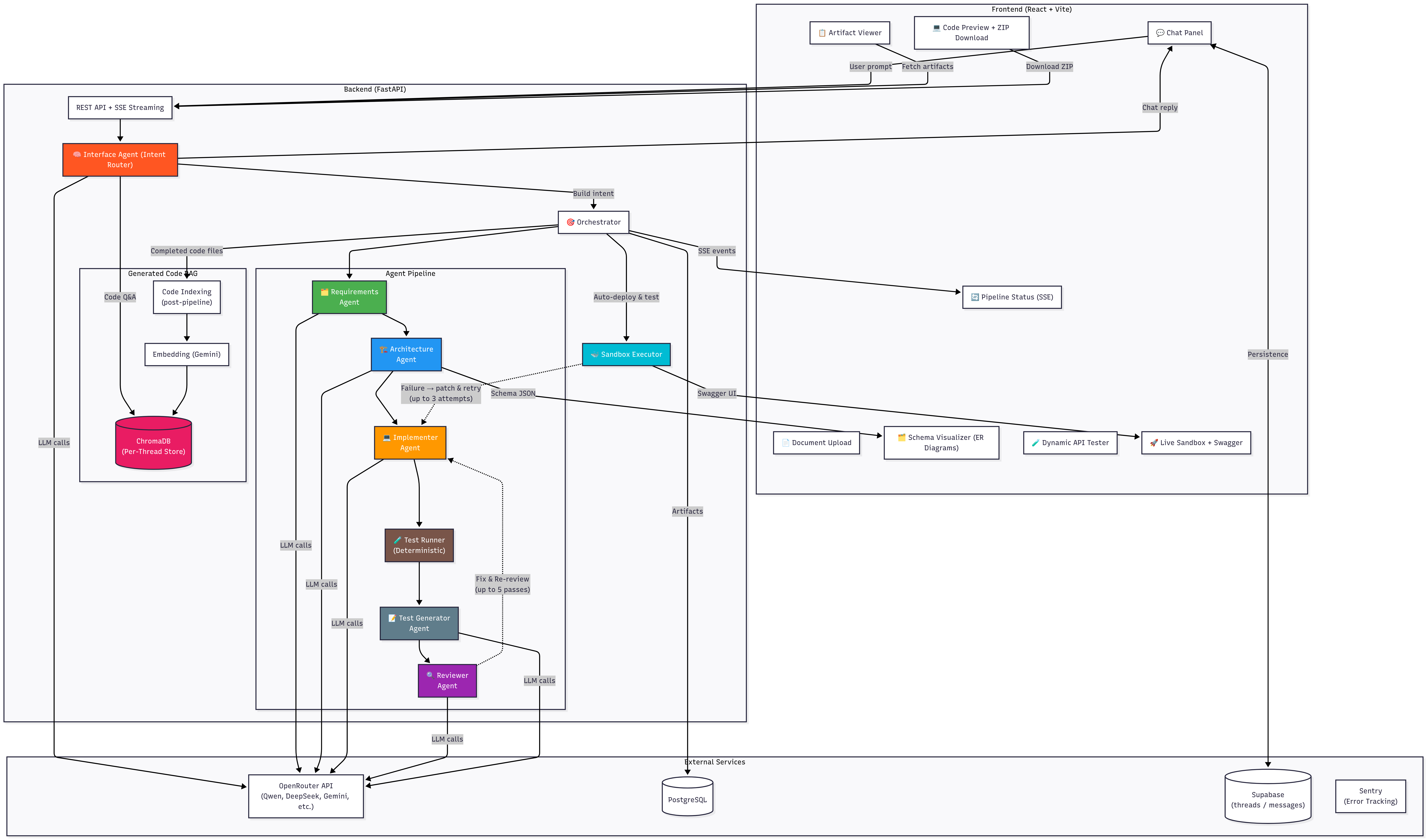
Database Schema
The platform manages complex relationships between users, projects, generation runs, and versioned artifacts.
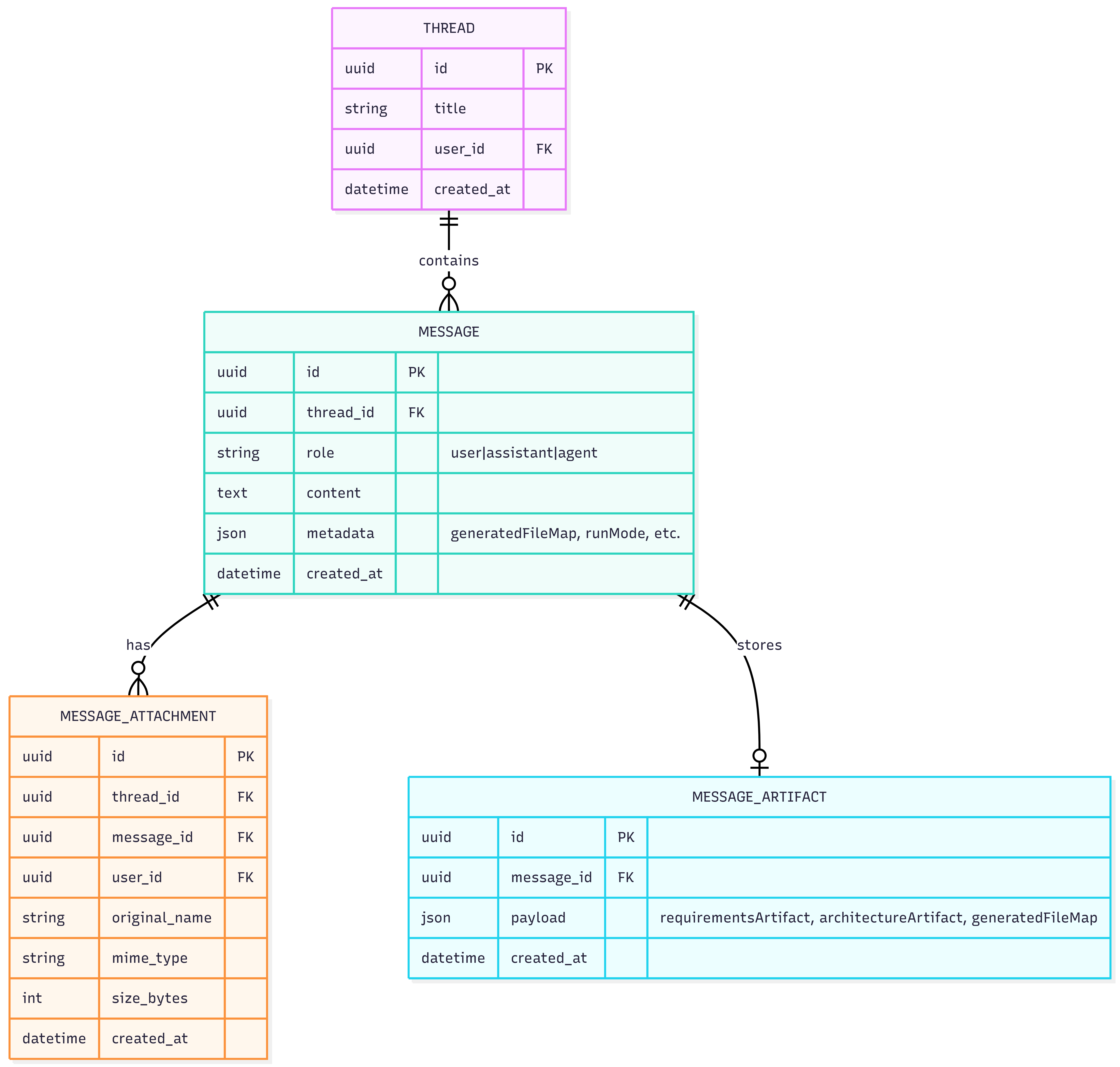
💡 What I Learned
- Orchestrating Agentic Workflows: Gained deep experience in managing long-running, multi-step LLM processes and maintaining state across asynchronous agent transitions.
- Safe Code Execution: Designed a secure sandbox architecture using Docker to run untrusted AI-generated code without compromising the host system.
- Real-time UX for AI: Learned to use SSE to bridge the “latency gap” of LLM generation, providing users with immediate feedback and transparency during the 30-60 second build process.
- Systematic Self-Healing: Implemented automated retry-and-patch logic, significantly improving the success rate of generated backend applications.